- Beverage bottles
- Infusion bottles
- Pharmaceutical bottles
- Other glass containers
<- Glass Container TestingThermal Performance / 12RCJ-05A
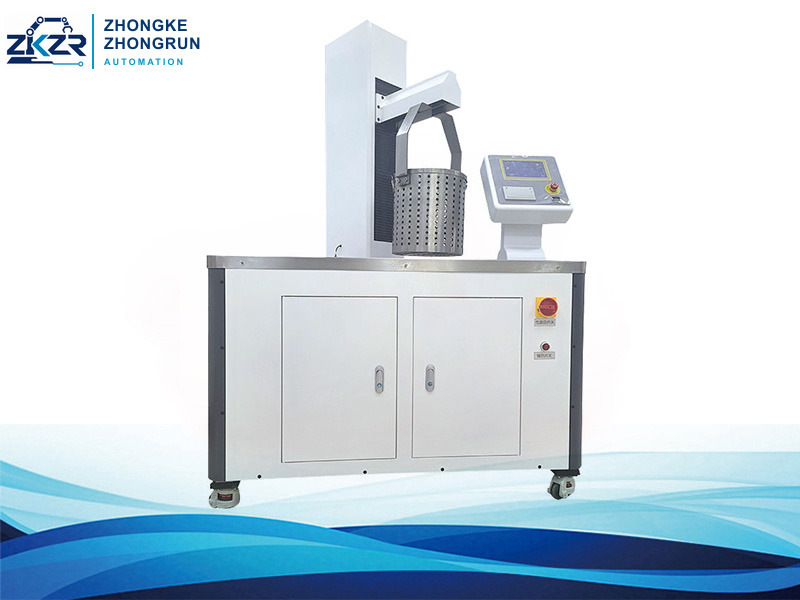
Glass Bottle Thermal Shock Tester
Evaluate glass-container resistance to rapid temperature change.
An automatic hot-and-cold bath system with active cooling for evaluating glass-container resistance to rapid temperature change.
Reference unit price / AvailabilityUSD 3,500 per system / In stock
01 / Application
Workflow and key features
The RCJ-05A heats a batch of glass containers in one bath, transfers the basket to the cold bath and supports evaluation of damage after a defined thermal shock. It is intended for sterilized beverage and pharmaceutical containers where thermal failure can cause product loss or safety risk.
- Automatic basket lifting and transfer reduce manual handling of hot glass
- PID temperature control supports a repeatable thermal-shock profile
- Large stainless-steel baths accommodate production-representative batches
- Configurable dwell time, container count and test mode
- Leakage-current protection and result printing support safer routine operation
02 / Public technical data
Reference configuration
Published values describe the referenced standard configuration. The formal quotation confirms the selected range, fixtures, utilities, method edition and supplied documentation.
- Temperature range
- Ambient to 90 deg C
- Temperature accuracy
- +/-0.5 deg C
- Power
- 6500 W
- Bath capacity
- 80 L low-temperature bath and 80 L high-temperature bath
- Control mode
- Automatic
- Lift capacity
- 50 kg
- Basket size
- 280 mm diameter x 300 mm high
- Machine dimensions
- 1240 x 920 x 1780 mm (L x W x H)
- Weight
- 300 kg
- Recommended environment
- 10-40 deg C; 50% RH
Test-method referencesWorkflow references, not a certification claim2 references +
These references identify workflows described for this model. The formal quotation confirms the exact edition, fixtures, software, accessories and verification documents supplied for the selected configuration.
- GB/T 4547-2007
- YBB00182003-2015
- Container type and drawing
- Sample dimensions and quantity
- Required test method
- Target load, pressure or thermal profile
Configuration boundary
Request formal configurationThe quoted configuration remains the controlling specification.
Published values describe the referenced standard configuration. The formal quotation confirms the selected range, fixtures, utilities, method edition and supplied documentation. Delivery scope, warranty, lead time, calibration evidence and overseas service are stated in the formal offer.